
Ants are one of the most common reasons homeowners reach for a can of spray, and one of the most common pests that keep coming back despite it. In Southern California, the ants that invade homes are especially resistant to do-it-yourself treatments, and in some cases those treatments make the problem worse.
Sprays Kill the Workers, Not the Colony
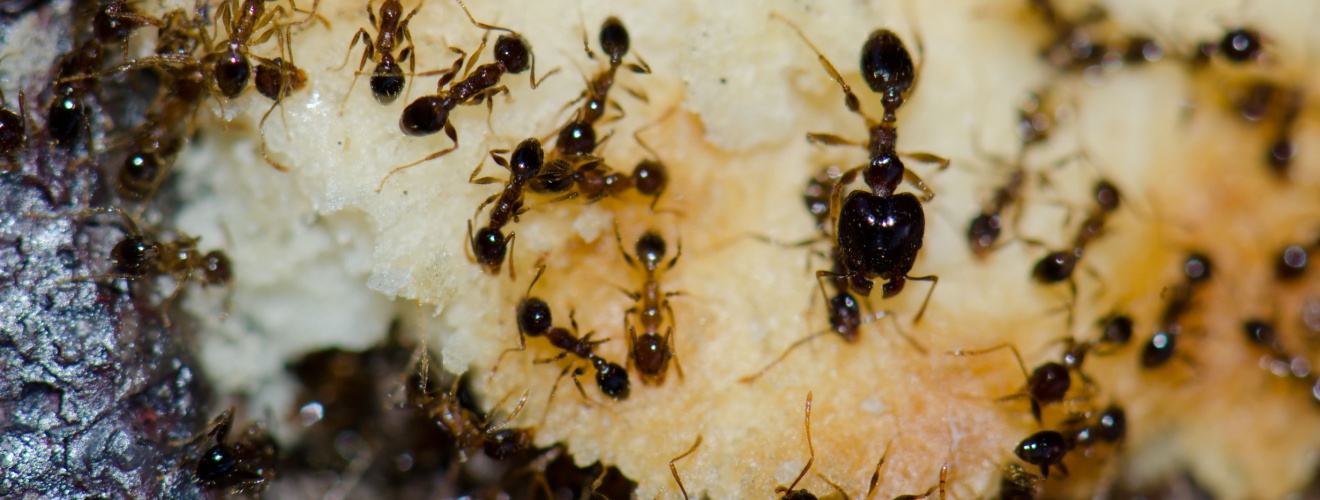
The ants visible on a counter are foragers, a small fraction of a colony that mostly stays hidden underground or inside walls. A contact spray kills the workers it touches and erases the scent trail for a short time, but the queens and the rest of the colony remain untouched. Within days, new foragers establish fresh trails, and the line of ants returns. Killing the ants you can see does little to the colony producing them, which is why the same trail often reappears in the same place a few days later.
Why Spraying Can Backfire
Many of the ants common in this region, including Argentine ants and odorous house ants, live in colonies with multiple queens. When these colonies are sprayed with repellent products, they can respond by splitting apart, with queens moving away to start separate nests in new locations. One nesting site can become several scattered ones, sometimes deeper inside the structure. Repellent sprays applied along trails can also cut foragers off from their nest in a way that drives more ants into the living space rather than out of it. The result is often more visible ants in more places than before the spraying began.
The Wrong Bait Gets Ignored
Baits can be effective, but only when they match the species and its current preference. Argentine ants favor sweets, while pavement ants lean toward greasy and protein-based foods, and an ant will walk past a bait that does not appeal to it. Homeowners often place a single type of bait, see no result, and conclude that baiting does not work, when the real issue is a mismatch. Baits also need to be left in place so that workers can carry the active ingredient back to the colony, which takes more patience than quick-kill products appear to require.
Supercolonies and Constant Reinvasion
Argentine ants form enormous, interconnected colonies that can span several yards. Even when a homeowner clears the ants inside, the larger colony outside keeps sending in new foragers, and neighboring properties supply a steady stream of reinforcements. Without addressing the colony at its source and sealing the routes ants use to get in, the cycle repeats no matter how many cans of spray are emptied. This is why so many homeowners feel they are fighting the same ants every few weeks.
Lasting ant control depends on treating the colony, choosing the right approach for the species, and closing off entry points, which is difficult to manage with retail products alone. If ants keep returning to your home despite your best efforts, BeeCal Pest Management can break the cycle with a targeted plan. Reach out for a free quote.