
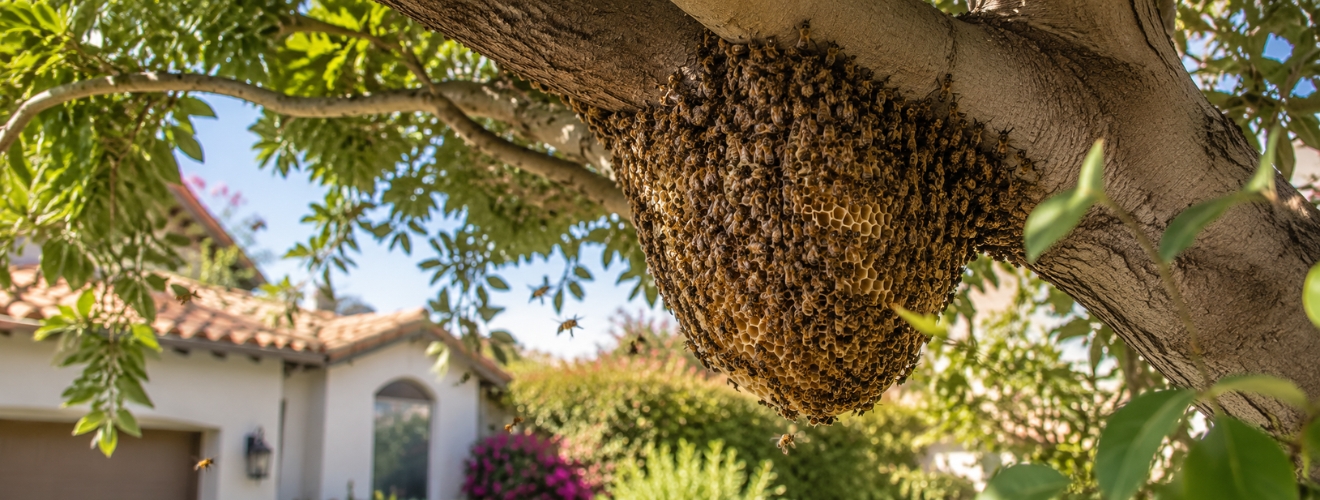
The best time to remove a beehive in Los Angeles County is as soon as you discover it. While the seasons influence how active and how large a colony is, a hive that has established itself in or around your home should not be left in place to wait for a more convenient time of year. The longer a colony remains, the larger and more difficult to remove it becomes.
When New Colonies Are Most Likely to Appear
Most new colonies arrive during swarm season, which in Southern California runs from late winter through spring and into early summer. During these months, established colonies reproduce by sending out swarms that look for new places to nest. Scout bees inspect cavities such as wall voids, chimneys, and utility boxes, and once a swarm moves in, it begins building comb right away. This is the period when homeowners are most likely to see a swarm settle on a fence or tree or notice bees moving into the side of a house. A swarm that is caught at this stage, before it builds comb, is far simpler to deal with than a colony discovered months later. Because swarming activity is highest in spring, this is also the season to watch your property closely and act quickly if bees begin moving in.
Why Removing a Hive Early Is Easier
A colony grows steadily once it settles into a cavity. In the first days and weeks, there is relatively little comb and honey, which makes removal cleaner and less invasive. As the weeks pass, the colony expands, stores more honey, and builds comb deeper into the structure. A swarm that moves into a wall in spring can become a large, well-developed hive by summer. A large hive can hold many pounds of honey, and that weight can push honey through drywall and ceilings, causing stains and damage that reach into living areas. A bigger colony also takes more time to remove, increases the chance of structural damage, and often costs more to address. Removing a colony early limits these problems and reduces the disruption to your home.
Removal Is Possible Year-Round
Southern California’s mild climate means honeybee colonies remain active for much of the year, and removal can be carried out in any season. A hive discovered in fall or winter still needs attention, since the bees and their stored honey remain inside the structure regardless of the weather. Colonies can also become more defensive when natural food sources decline later in the year, which makes prompt removal the safer course. Waiting for spring or summer to address a colony found in colder months only allows it to grow. Whatever the season, the right time to remove a beehive is when you find one.
If you have spotted a hive on your property, the sooner you act, the more straightforward the removal will be. BeeCal Pest Management will inspect the colony, recommend the safest approach, and relocate the bees whenever possible. Request a free quote from BeeCal Pest Management to schedule your beehive removal.