
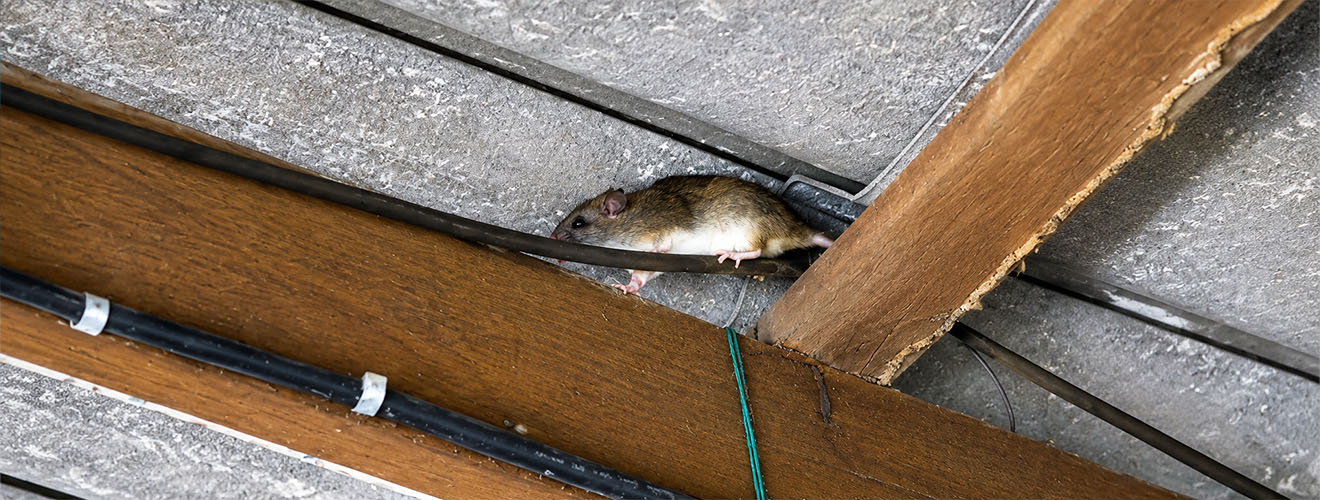
Roof rats are an escalating problem throughout Los Angeles and surrounding cities. Unlike ground-dwelling rodents, roof rats are excellent climbers and prefer elevated nesting sites—making attics, rafters, and wall voids their ideal habitat.
At BeeCal Pest Management, we routinely find roof rat activity in homes that appear clean, well-maintained, and recently renovated. These infestations often go unnoticed until damage or contamination becomes severe.
Signs of Roof Rats in Your Attic
If you notice any of the following, roof rats may already be established in your attic:
- Scratching or scurrying noises at night
- Droppings along attic insulation or stored items
- Grease rub marks along rafters or pipes
- Chewed wiring, ducting, or insulation
- Entry points at roofline vents, eaves, or utility lines
Roof rats are nocturnal. If you’re hearing activity after dark, the infestation is rarely “new.”
Why Roof Rats Are a Serious Risk
1. Structural Damage
Roof rats chew continuously to control tooth growth. Common damage includes:
- Electrical wiring (fire hazard)
- HVAC ducting
- Insulation contamination
- Wood framing and fascia damage
2. Health Concerns
Rodent droppings and urine can transmit:
- Salmonella
- Leptospirosis
- Hantavirus (rare, but possible)
- Secondary pests such as mites and fleas
Contaminated insulation often requires removal—not just treatment.
3. Rapid Reproduction
A single pair of roof rats can produce dozens of offspring per year, quickly turning a minor issue into a full-scale infestation.
How Roof Rats Enter Los Angeles Homes
Most roof rat infestations start outside, not inside.
Common entry points we find include:
- Broken or unscreened attic vents
- Gaps at roof-to-wall intersections
- Utility penetrations (AC lines, gas lines, solar conduit)
- Tree branches overhanging roofs
- Damaged fascia boards or eaves
If entry points are not sealed, trapping alone will fail.
Effective Roof Rat Control in Los Angeles
Step 1: Full Exterior Inspection
We identify all active and potential entry points, not just where rats are currently entering.
Step 2: Strategic Trapping
Trapping is used to reduce the active population, but it is never the final solution.
Step 3: Rodent Proofing (Exclusion)
This is the most critical step:
- Vent screening
- Roofline sealing
- Gaps sealed with rodent-resistant materials
- Structural repairs as needed
Step 4: Attic Sanitation (When Required)
Heavily contaminated attics may require:
- Insulation removal
- Disinfection
- Deodorization
Why DIY Rat Control Fails in Los Angeles
- Poison use is heavily restricted in California
- Hardware-store traps don’t address entry points
- Roof rats simply relocate within the structure
- Partial sealing forces rats deeper into walls
- Professional exclusion is the only long-term solution.
Schedule a Roof Rat Inspection
If you suspect roof rat activity in your attic, early intervention saves thousands in repair costs.
BeeCal Pest Management provides professional roof rat control and attic exclusion throughout Los Angeles and surrounding cities.