
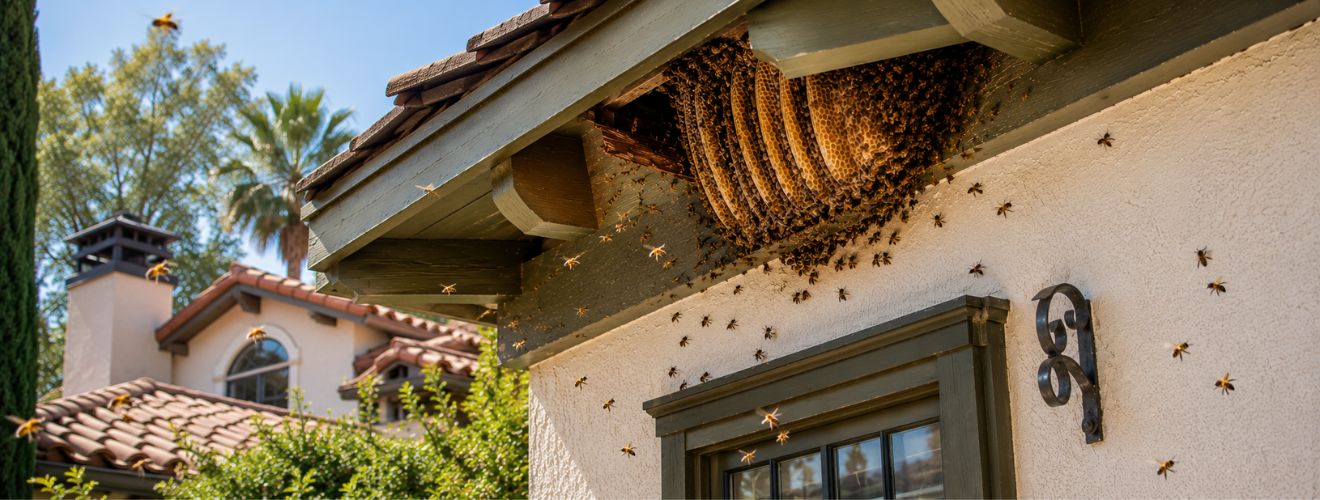
Honeybees are particular about where they build a hive. When a swarm leaves to start a new colony, scout bees search for an enclosed space that is dark, sheltered from the weather, and easy to defend. Homes around Pasadena offer many spaces that fit this description, which is why colonies turn up in the same kinds of locations year after year. Knowing where bees tend to settle helps you spot a developing hive early and take steps to make your property less inviting.
What Makes a Spot Appealing to Bees
A good nesting site shares a few features. It is a protected cavity with a small opening the bees can guard; it stays out of direct sun and rain, and it sits within easy flying distance of flowers and water. Locations where bees have nested before are especially attractive because leftover wax and scent signal that the spot is suitable. Pasadena’s mild climate, mature trees, and established neighborhoods provide all of these conditions across both older and newer homes.
Common Hive Sites on the House
The structure of a home offers several cavities that suit a colony. Bees frequently move into wall voids, slipping in through gaps in stucco, siding, or trim and building combs in the hollow space behind. Chimneys are another common choice, particularly when they are uncapped. Attics, soffits, and the spaces beneath eaves give bees room to expand, and they often enter through vents, knotholes, or the gaps where pipes and wiring pass through an exterior wall. Because many of these cavities are out of sight, a colony can grow for weeks before anyone notices the steady traffic of bees at the entrance.
Hive Sites in the Yard and Around the Property
Bees do not limit themselves to the house. Around the yard, colonies commonly establish themselves in water meter boxes and irrigation valve boxes, where the lid provides cover and the opening is easy to defend. Other frequent locations include hollow sections of block walls, cavities in mature trees, electrical and utility boxes, and the space under decks. Detached garages, sheds, and stored items such as empty planters, unused grills, and overturned containers can all become hive sites when they sit undisturbed for long enough. Quiet corners of a property that rarely see foot traffic are the most likely to host a colony.
Reducing the Chance of a Hive on Your Property
A few maintenance steps lower the odds that a swarm will settle in:
- Seal openings in walls, trim, and the foundation, paying attention to gaps as small as one-eighth of an inch
- Screen attic vents and weep holes, and have open chimneys capped
- Check utility and irrigation boxes periodically, and keep an eye on sheds and stored equipment
If a colony has been removed from your home before, make sure the cavity was cleaned and sealed, since the old site will continue to attract new swarms until the scent is gone.
If you have noticed bees gathering around any of these areas, BeeCal Pest Management can inspect the property, remove an active colony, and seal the openings that invite them in. Contact us for a free quote to schedule an inspection.